New staggering details about Southampton’s spying missions have been revealed – including the lengths Saints initially went to to cover up their cheating when they were caught watching Middlesbrough at Rockliffe.
The League Arbitrational Panel’s full written reasons have now been published after Southampton’s appeal against their expulsion from the play-offs and a four-point deduction to be applied at the start of next season was dismissed.
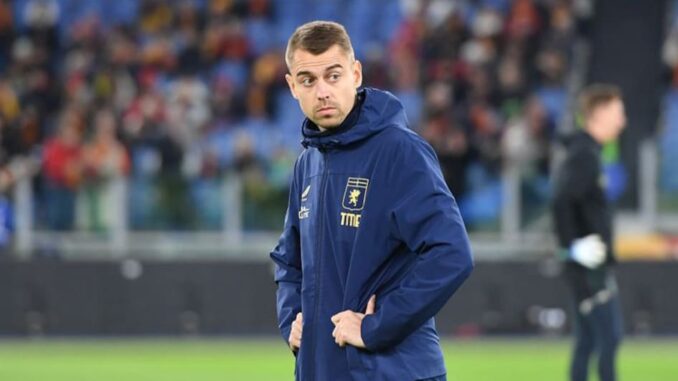
The report lays out in remarkable detail how Southampton planned and executed their spying mission on Boro ahead of the Championship play-off semi-final first leg between the sides – and how it was sanctioned by head coach Tonda Eckert.
The report reveals that on Monday, May 4, five days prior to the first leg at the Riverside, Eckert set out his wish to have Boro’s training watched so he could find out whether Hayden Hackney would be fit to feature.
Clubs are banned from watching opposition train in the 72 hours prior to a game.
And the League Arbitration Panel’s report now discloses more bombshell revelations, including:
•Junior analyst intern – William Salt – was uncomfortable with the idea – Saints had already spied on Oxford and Ipswich, the two other cases they’ve admitted to, but feared he would lose his job if he said no.
• Eckert was unhappy that Salt hadn’t made the trip a day earlier to spy on Boro on Wednesday as well.
• Salt was shown drone footage of Boro’s training ground before making the trip so he knew where best to position himself.
• Salt immediately deleted his Linkedin account after being rumbled by Boro staff, and Southampton then tried to delete photos of the analyst off their own website.
Despite the mind-blowing detail which lays bare what is described in the report as a “contrived and determined plan from the top down”, Southampton have released yet another statement once again complaining at the punishment and questioning the “apparent historic and indirect connections of two panel members to Middlesbrough.”
Those members are David Winnie – a footballer turned solicitor who made one appearance for Boro 33 years ago – and sports legal expert Lydia Banerjee, who works for Littleton Chambers, a company previously contracted by Middlesbrough to represent them in cases relating to Garry Monk’s sacking and a contractual dispute that followed.
However, it’s understood Southampton had the opportunity to reject the choice of panel members before the Independent Disciplinary Commission hearing took place.
The panel ruled against Southampton, a decision that was upheld by the League Arbitration Panel the following day after Southampton had lodged an appeal.
The League Arbitration Panel’s written reasons also reveal that Salt felt he “wasn’t provided an opportunity to say no” when he was asked to spy on Oxford ahead of Southampton’s game against the U’s last December and that Eckert was “adamant” someone had to spy on Ipswich before Saints took on the Tractor Boys in April.
Here, in staggering detail, is what’s included in the League Arbitration Panel’s report, headlined ‘The Middlesbrough Incident’.
It reads: “On Monday 4 May 2026, Mr Eckert attended a match preparation meeting with his coaching and analyst teams. At that meeting, he asked whether it would be possible to see Middlesbrough train that week – he was particularly interested to see whether a particular player, Hayden Hackney, was training or not, because there were differing reports as to his fitness – and it was agreed that someone would be identified to go to Middlesbrough’s training ground.
“The Junior Analyst Intern was again chosen. Analyst 2 told him that he (Analyst 2) had disagreed with this course when Mr Eckert proposed it.
“The Junior Analyst Intern said that he felt under extreme pressure due to the context of the importance of the game for the Club. He feared that he might be dismissed by the Club or it might otherwise adversely affect his career if he did not do it.
“So, he went. He felt bound to take videos on his phone because (as he said in a message to Analyst 1 after he was caught), he felt pressurised by the coaches: “With them all telling me they want more out of it than what I got at Oxford as got it wrong etc they clearly don’t think my word is good enough so wallop there’s your footage”.
“At one stage, Analyst 1 suggested to him that he might not go to the Middlesbrough training session, but simply report back that security there was too tight to make any observations and Mr Eckert would be none the wiser.
“The Operations Manager made arrangements for the flights and two nights’ accommodation. Before he left, the Junior Analyst Intern was shown drone footage of the Middlesbrough training facilities so that he could get an idea of where to stand.
“He flew up to Middlesbrough on Wednesday 6 May. The Junior Analyst Intern was told that Mr Eckert was unhappy because he did not fly up on the Tuesday so that he could see the Wednesday training session; but the first flight he could get was on the Wednesday.
“On Thursday 7 May, he walked from his hotel to the training ground, arriving at about 10.40am.
“The first team training session started at 11.15am. He identified where the first team were training at about 11.30am, and he proceeded to record three videos on his phone from behind a tree.
“After a few minutes, four people began walking towards him, and he sent the videos to Analyst 1 who sent Mr Eckert information from the video including the projected Middlesbrough line up (including Mr Hackney).
“The Junior Analyst Intern started to move rapidly away, but one of the men ran and caught him up. The Junior Analyst Intern said he was “just watching”, and the man asked him to delete the videos which he did.
“He then walked on to a nearby golf clubhouse where he changed and deleted his LinkedIn profile because he was worried that Middlesbrough would recognise him from that.
“The Junior Analyst Intern then left the area and went back to his hotel from where he rang Analyst 1 who told him to wait there until Mr Eckert agreed he should return to Southampton.
“After some time, the Junior Analyst Intern not having received any confirmation, left of his own accord, returning to Southampton by train. It was while he was on the train that he learned from the internet news that Southampton had been caught “spying” on Middlesbrough.
“Analyst 1 provided Mr Eckert with a breakdown of what he interpreted from the videos, including a predicted line up and (Analyst 1 said) it showed how, when Southampton built up on the left side, Middlesbrough would press man-to-man.
“It was predicted from what had been seen that Mr Hackney would play. Analyst 1 suggested they ask the media team to take down or hide the manager of the month pictures online, because the Junior Analyst Intern featured in the background: “The only way they can put his face from CCTV with [Southampton] as he’s deleted his LinkedIn picture. Just got to hope they won’t put the 2 together”.
“He asked Mr Eckert whether he wished to see the videos, and he said he did. Analyst 1 also shared the videos with Analyst 3, upon request, on the Friday before the match.”
The report also reveals that Kieran Scott, Middlesbrough’s head of football, provided evidence at the initial hearing and set out how Southampton will have gained a sporting advantage from their Boro spying mission.
Scott said Southampton will have seen that Boro “were planning to use a formation with Luke Ayling operating in a more advanced man marking role”.
The report also stated: “Middlesbrough’s HoF noted that Southampton made four changes from their previous match and, in the first half of their first leg match with Middlesbrough, they sat very deep and did not press, which was a tactic he assumed was the result of their observing Middlesbrough’s formation.”
Southampton’s latest statement, released in response to the League Arbitration Panel’s written reasons, says: “Southampton Football Club notes today’s publication by the Arbitration Panel of the written reasons behind our unsuccessful appeal of the sanctions the Disciplinary Panel previously imposed on us in the EFL proceedings. We accept that the club breached the relevant regulations, and we recognise that the disciplinary bodies were entitled to conclude that proof of sporting advantage was not necessary in order to establish a serious offence.
“The club accepts that aspects of our initial response to the situation were not treated with the level of scrutiny they required at the time. In hindsight, we wish this had been managed differently from the outset and this represented an error of judgement for which we take responsibility. Despite this, we are happy with the way in which we admitted the charges and offered our full cooperation and honesty once the formal EFL investigation process had started.
“We also note that the club was judged against the very highest standards of integrity and good faith. That is entirely proper. What is harder to accept is that similar scrutiny does not appear to have been applied to the composition of the disciplinary panel itself, given the apparent historic and indirect connections of two panel members to Middlesbrough. While those connections do not by themselves prove bias, they plainly raise legitimate questions about consistency, perception and the standards of independence expected in proceedings of this magnitude.
“The club is also concerned by the weight placed on assertions that junior staff were pressurised into involvement, when some of the most serious allegations appear not to have been supported by direct evidence. That said, junior employees should never have been placed in a position where they felt under pressure, and the club accepts responsibility for that failure of leadership and oversight.
“This case has ultimately been decided on the basis that breach and attempted breach were enough, regardless of whether any sporting benefit was actually obtained. In fact, at no stage was there any finding that the club actually obtained any sporting advantage as a result of the conduct in question.
“That is a severe interpretation, but one the disciplinary authorities were entitled to adopt under the rules as written.
“Southampton Football Club will now reflect carefully on the published reasons, review its internal processes and ensure that governance, oversight and decision-making procedures are strengthened as a result.
“Our responsibility now is to acknowledge what has happened, take ownership of the lessons it brings, and use this experience to strengthen our judgement, discipline, and integrity moving forward together as a club.”

Be the first to comment