Brighton are becoming something of a modern miracle. They are the club that seems to defy the belief that success requires aggressive expenditure and that regularly losing players to rivals is a handicap.
Previously, Brighton’s success was dependent on finding replacements for the players they sold. What has become interesting of late, though, is the fact that selling their best players has actually become a central part of how the team improves. The club is continuously able to redesign the team around personnel change without losing its identity – and this goes for the manager as well.
The conventional logic would be that selling your best players is likely to trigger decline in the long run. There was a time when Brighton selling their best players would trigger some kind of warning sign ahead of impending regression. Now, it increasingly feels like the beginning of another improved iteration of the same functioning club model.
Carlos Baleba and Jan Paul van Hecke were the notable departures this summer – would Brighton finally feel the consequences? Not so. Instead, five games into the new season, they have beaten Manchester United and Arsenal and look like one of the most interesting teams in the Premier League. Brighton are not selling well-marketed duds, though, and it does beg the question of how a club can repeatedly remove important components without destroying the team.


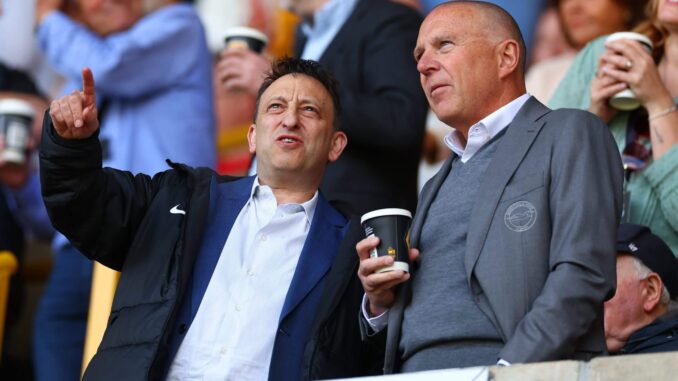
For those less familiar with Brighton’s story, it is worth introducing some of the guiding principles of owner Tony Bloom’s revolution on the south coast. Brighton have become league-leading in their identification of undervalued players; they develop them, give them Premier League exposure and then sell them for significant profits to reinvest. It sounds pretty simple in theory – the likes of Caicedo, MacAllister, Cucurella and Bissouma are a handful of examples of this strategy at work.
But this isn’t just about player trading; it’s also about the creation of an environment where losing a £50m player doesn’t necessarily make the team worse. Brighton don’t replace players; instead, the focus is on the function that the player provided – closer to the ‘Moneyball’ philosophy popularised by Michael Lewis’ excellent novel. Their squad can contain players with very different profiles while the underlying football remains recognisable. They have built flexibility into their system without losing a core identity.
The same is true when comparing Graham Potter to Roberto De Zerbi and Fabian Hürzeler. These are very different coaches, yet they have produced sides that retain certain underlying characteristics. Positional flexibility, aggressive pressing and a desire to build from the back are overarching hallmarks of this Brighton side through multiple overhauls.
But there is a limit to this model, and Brighton haven’t completely avoided periods where turnover has hurt them. The club are brilliantly walking a tightrope through their recruitment and player trading, but this is unlikely to work indefinitely at the very highest level. Brighton are also no longer the underdogs they once were, and expectations have changed. If they finish 12th this season, rather than qualifying for Europe, expect a level of disappointment that wouldn’t have existed amongst the fanbase just five years ago.
This also changes the economics of selling. At some point, Brighton will encounter player decisions where the sporting value of keeping the player exceeds the financial value of selling them – and at this point, does the model need to change altogether?
The cleverest thing that Brighton have done is make the departure of important players less important. The best Brighton teams have never been built around one player. They have been built around an organisation capable of finding another answer when that player leaves. Carlos Baleba doesn’t need to be replaced by another Carlos Baleba. Neither did Caicedo. Or MacAllister. Or Bissouma.
The player changes. The team changes. Sometimes even the football changes. What hasn’t changed is Brighton’s ability to change with it. Perhaps that is the real Brighton model: not buying low and selling high, but continuously losing important players without losing themselves.
Brighton’s greatest competitive advantage isn’t their ability to find the next star; it’s their ability to redesign the team around whoever leaves without losing the principles that made the previous team successful.
As Brighton’s ambitions grow, so will the forces pushing them away from the model that has made them such a success in recent years. Will the Seagulls be forced to reinvent their model altogether, or will they continue to persist with something that has brought them consistent success?

Be the first to comment